Loading...
KS1 to A-Level
Handwritten work, marked before the lesson ends.
Photograph a page of real handwriting. Get marks against the actual paper — or a TAF standard for primary writing — with quoted evidence and one next step worth teaching. Usually in under a minute.
Teachers confirm or override every mark — aligned to DfE guidance. Free to start, no card required.
“ReMarkAble AI has transformed how we mark and feed back across the school. It's a game-changer.”
- KS1–A-Level
- One platform, every stage
- AQA · Edexcel · OCR · WJEC
- Mark schemes retrieved at marking time
- Under a minute
- Typical wait for a full report
- Teacher-confirmed
- Every mark can be overridden
Sound familiar?
Writing is the work that takes longest to mark — and gets the thinnest feedback.
Extended writing is still handwritten, from a Year 2 recount to an A-Level essay. It is the slowest thing in the pile, so it is the thing that gets a tick and a sentence.
The marking comes back days later
By the time the book is returned, the question has gone from the student's head — and from the teacher's evening.
The comment is “develop your analysis”
True, and unusable. Nobody can act on feedback that doesn't quote the line it is talking about.
Nobody knows where the marks went
Not the student, not the parent, and not always the next teacher — because the standard was never written down in the same language twice.
ReMarkAble AI reads the handwriting as it is, marks it against the real scheme, quotes the evidence, and names one next step — while the piece is still fresh. A teacher confirms it.
Find the version built for you
The same marking engine, framed in the language you already use — Assessment Objectives, TAF standards, or just “is this any good?”
Students
See exactly where the marks went
Upload the answer you actually handwrote. Get marks against the Assessment Objectives, the lines that earned them, and what to fix before the next paper.
Mark an answer freeHow it works for studentsParents
Know where they stand, in plain English
Photograph a piece of writing. Get the standard — Working Towards, Expected, Greater Depth, or a GCSE grade — plus one thing to practise. No teaching qualification needed.
Mark a piece freeHow it works for parentsTutors
Arrive already knowing what to teach
Set work between sessions and let the marking happen before you sit down. Start the hour on teaching the gap instead of finding it.
Mark between sessionsHow it works for tutorsSchools & teachers
Give the feedback without taking the evening
Mark a whole class against the same standard, keep the language consistent across the department, and hold a record of progress you can moderate from.
See it for schoolsThe loop
From a photo of a page to the next lesson
Three steps, usually under a minute. The same loop whether it is a Year 2 recount or an A-Level essay.
- 1
Photograph the page
Handwritten or typed, one page or five. No transcribing, no retyping — the work is read as it was written, in the order it was written.
- 2
Read the report
Marks against the paper and question, or a TAF standard for primary writing. Every judgement quotes the line it came from, so you can check it rather than trust it.
- 3
Teach or practise the next step
One named gap, not a list of twelve. Each piece stays in the history, so you can see whether the standard is actually moving.
See it in action
From handwriting to feedback while you wait
Upload a photo of your work, pick your exam board and paper, and get a detailed assessment with grades, strengths, and next steps — usually under a minute. Or open a live GCSE English Language report marked on the product.
What you actually get back
Not a score and a smiley face. A marked piece you could defend in a moderation meeting.
Fix it while it is still fresh
Feedback lands in under a minute, not next week — so the student is still holding the question they got wrong.
Evidence, not adjectives
Every strength and every next step quotes the line it came from. That is the difference between feedback you can act on and feedback you can only agree with.
The actual mark scheme
AQA, Edexcel, OCR, Eduqas and WJEC schemes are retrieved at marking time, per subject and paper. Primary writing is judged against the Teacher Assessment Framework for that year.
A teacher has the last word
Marks are proposed, never imposed. Anything a teacher overrides is kept alongside the original, so the judgement is auditable.
A record that shows movement
Each piece stays in the history with its standard and next step, so progress is something you can see rather than something you remember.
The same standard, every time
The tenth script at 9pm is judged the same way as the first at 4pm — which is what makes the language consistent across a class, a department or a trust.
For schools and departments
Mark the set, moderate it, then release it.
Primary writing or GCSE scripts, marked as a class against the same standard. Teachers confirm or override every judgement before a single student sees it — and the record stays, so you are not rebuilding evidence in June.
Built against the DfE's guidance on generative AI in education settings. See how we meet each of the five principles.
A whole class in one go
Attach the class's scripts against a paper and send the set to be marked. Come back to a batch, not a queue you have to babysit.
Moderate, then release
Every proposed mark, grade and comment can be overridden before anything reaches a student. The AI original is kept alongside your version for audit.
One language across the department
The same AO wording, or the same WTS / EXS / GDS wording, on every piece — which is what makes a moderation meeting short.
Teachers stay the final authority
Nothing is published to a student until a teacher has approved it. That is enforced in the product, not promised in a policy.
Primary, secondary, sixth form, college or trust →
School plans from £49/month or £500/year. Prices exclude VAT where applicable. See school pricing.
Already know your phase? Primary · Secondary · Multi-academy trusts · School pricing
Department for Education guidance
Built to the framework your school is already held to
The DfE publishes guidance for schools and colleges on using generative AI. We built ReMarkAble AI against its five principles rather than around them — and we set out, publicly and in detail, how the product meets each one.
Human in the loop
A qualified teacher stays the final authority on every grade.
Data protection
Student work is never used to train public AI models.
Safety & safeguarding
Content filtering, with teacher oversight before anything is final.
Transparency
Every report carries a clear AI-generation disclaimer.
Accuracy & reliability
Calibrated against official mark schemes and government exemplars.
Curriculum Coverage
From first sentences to advanced essays — we support every stage of the writing journey
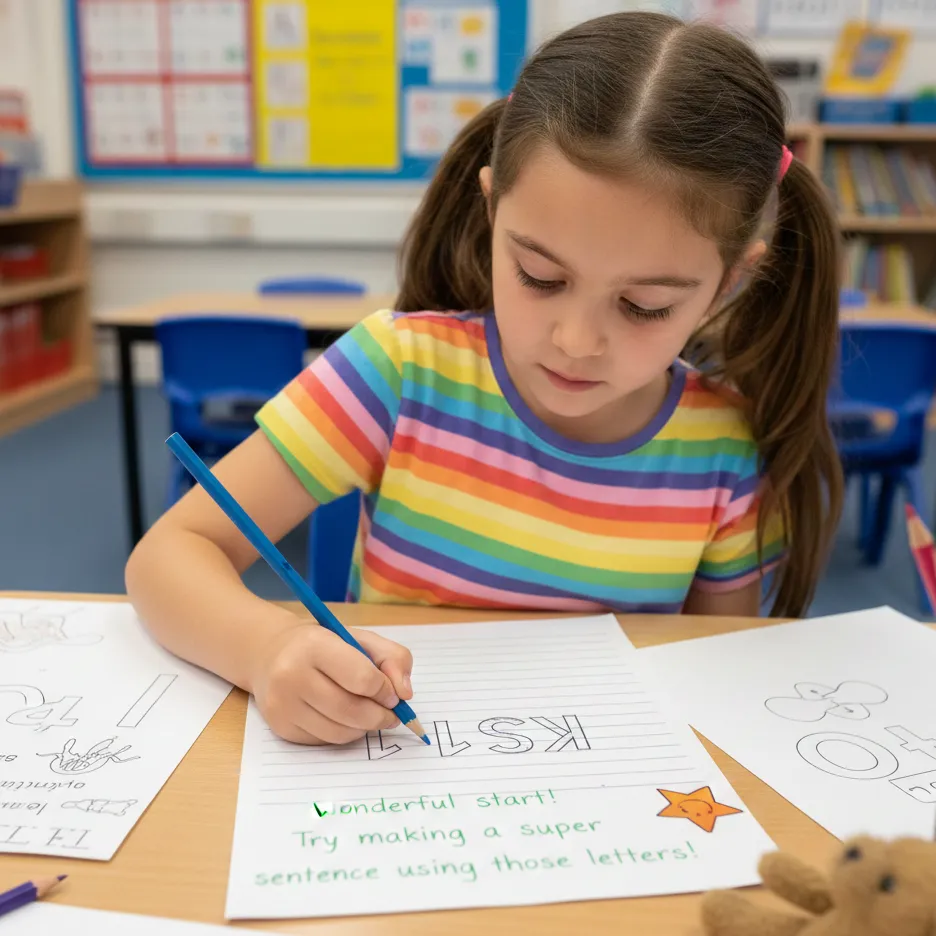
KS1
Give KS1 teachers time back with TAF-aligned next steps they can confirm.
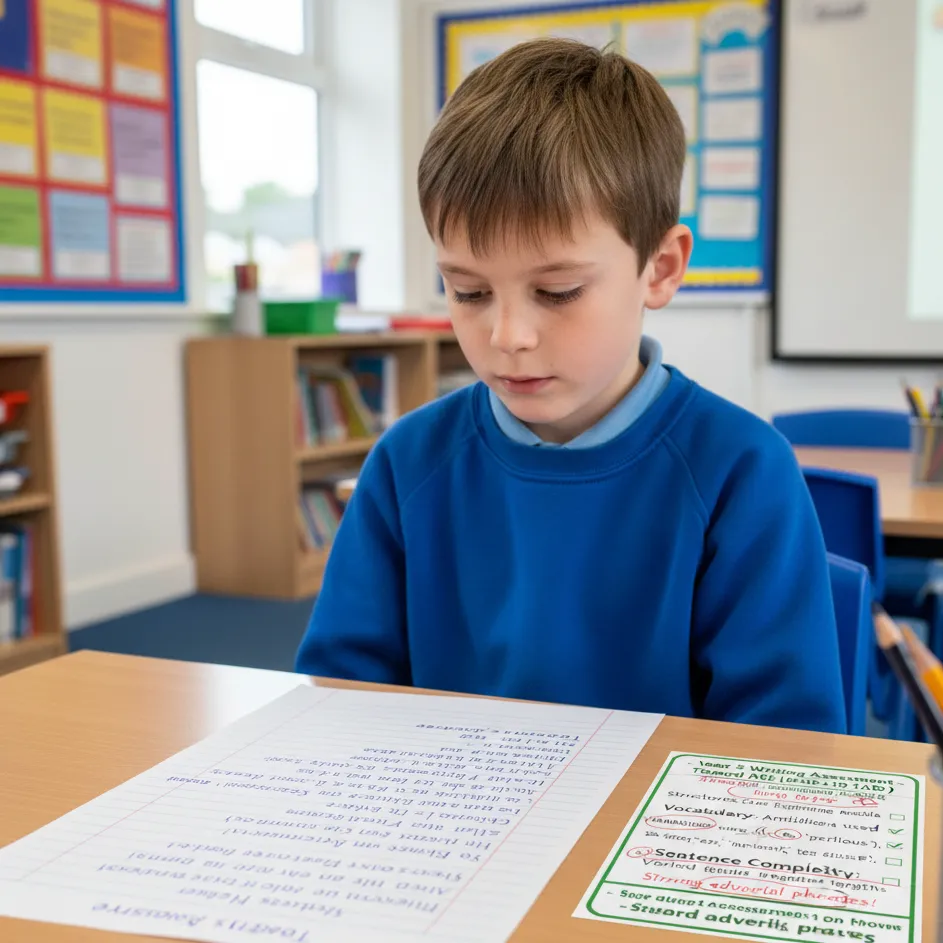
KS2
Give KS2 teachers consistent TAF feedback and a record of progress they can act on.
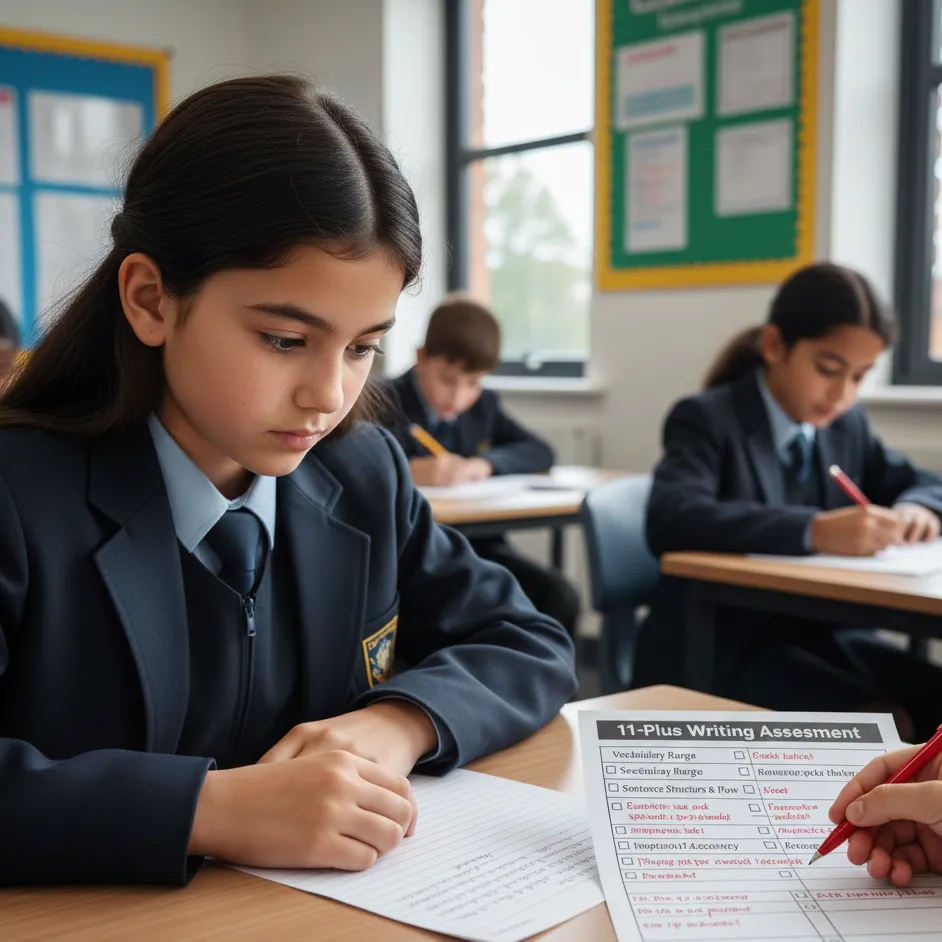
11-Plus
Prepare pupils for selective school entry with targeted writing assessment.
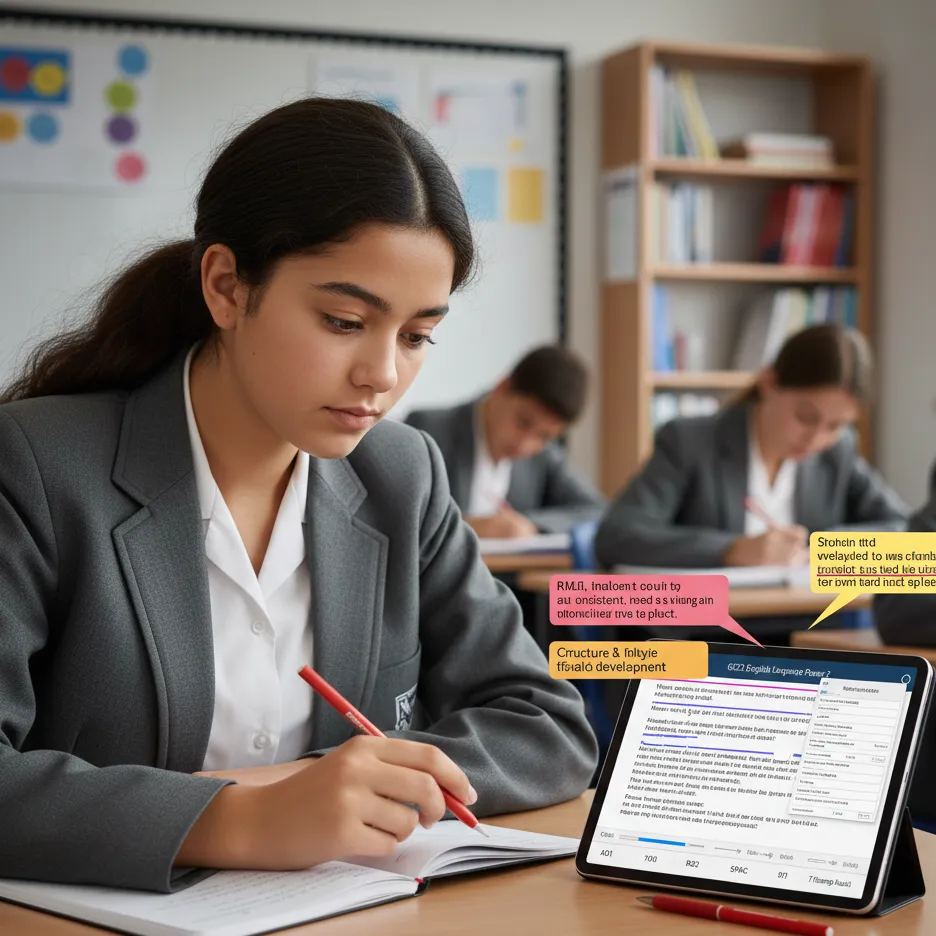
GCSE
Instant AI marking aligned to GCSE English Language specifications, including structure and SPaG.
A-Level
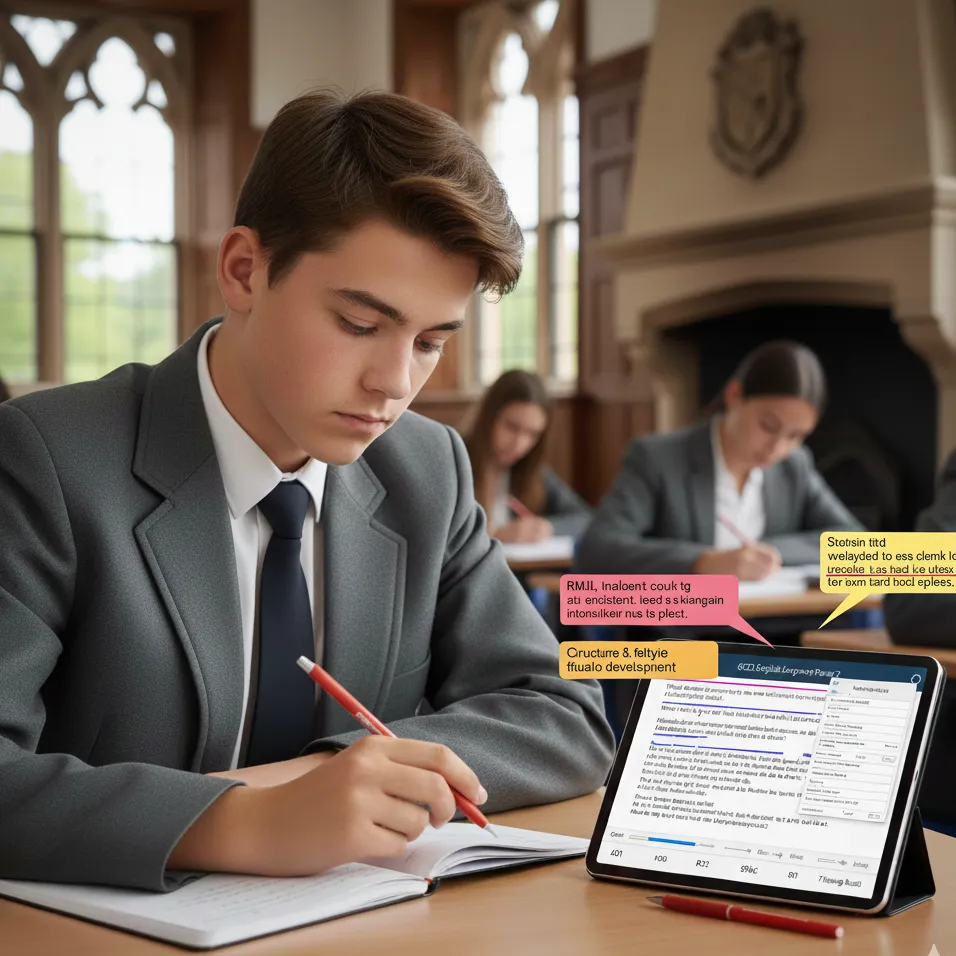
Support advanced learners with detailed feedback on structure, argument development, and critical analysis.
What Our Community Says
Hear from teachers, students, parents, and school leaders who use ReMarkAble AI every day
Swipe to see more
Mark one piece and see for yourself
Photograph a page of handwriting and read the report it comes back with. Free to start, three assessments every 30 days, no card required.
What Is AI Marking?
AI marking is the use of artificial intelligence to assess student work against curriculum criteria and return structured feedback — including grades, strengths, areas for improvement, and examiner-style commentary. Unlike generic grammar checkers, AI marking tools like ReMarkAble AI retrieve official mark schemes from exam boards such as AQA, Edexcel, OCR, and WJEC, enabling them to evaluate extended writing in the same way a qualified examiner would.
According to the Department for Education's 2024 Teacher Workload Survey, teachers in England spend an average of 8.7 hours per week on marking and assessment — making it the single largest non-teaching demand on their time. AI marking addresses this by providing instant, curriculum-aligned feedback on handwritten or typed student work, allowing teachers to focus on teaching and students to receive timely feedback that drives improvement.
8.7 hrs/week
Average teacher time on marking
Source: DfE Workload Survey 2024
5.3 million
GCSE entries in England (2025)
Source: Ofqual Annual Report 2025
Usually <1 min
AI feedback time vs days for teacher marking
Resources & Guides
Everything you need to understand AI marking and get the most from your revision
AI Marking Software for UK Schools
How AI-assisted marking reduces teacher workload while maintaining standards.
AI Marking for Teachers
Save hours on essay marking with AI-powered feedback drafts you review and refine.
Exam Marking Software
AI-powered exam marking aligned to GCSE and A-Level mark schemes.
Handwriting Recognition Marking
Upload photos of handwritten work and get instant AI feedback.
Best AI Essay Markers for GCSE
Compare the top AI marking tools for GCSE students in 2026.
How Accurate Is AI Marking?
We tested AI accuracy against AQA, Edexcel and OCR mark schemes.