A-Level support

Feedback that matches the demands of A-Level study

Photograph a handwritten or typed practice response. Get proposed marks against the paper and question, and a next step you can teach. A-Level marking is included with Premium. In class marking, a teacher confirms or overrides every mark before pupils see it.

“It helped me improve my structure and clarity before my A-Level English exam.”
Emma — A-Level Student

From a photographed answer to the next lesson

The handwriting below is from AQA’s published Answers and commentaries for GCSE English Language 8700 Paper 2: Writers' viewpoints and perspectives (from 2026) — so you can see the full loop on a public collection, not a pupil’s book.

Mark GCSE English Language

Paper

Paper 1Paper 2

Question

12345
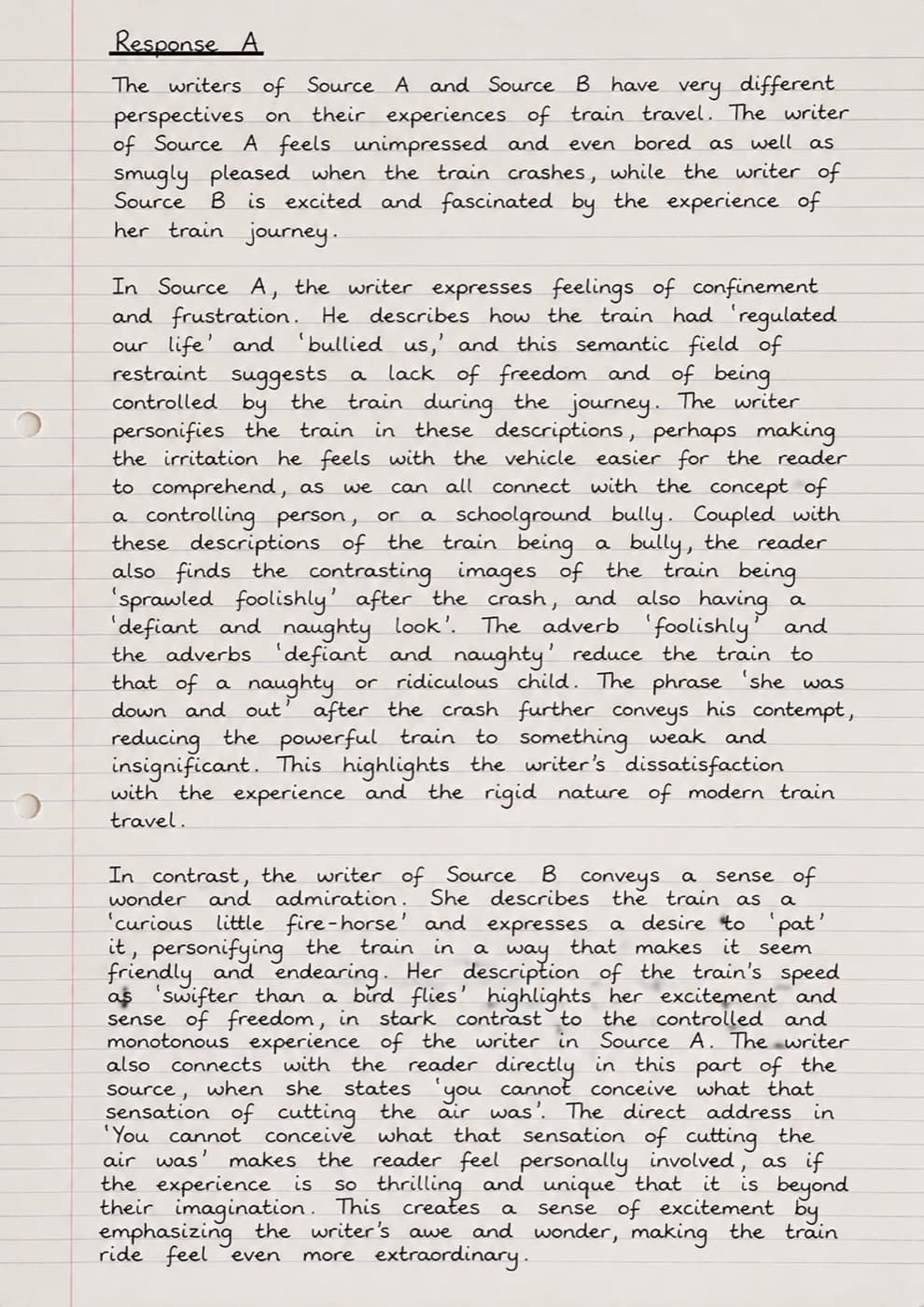
Handwritten AQA Paper 2 Question 4 Response A, published as a Level 4 comparison of perspectives
Photo of handwriting — ready to mark

1. Upload the answer

Photograph the work, pick paper and question

Handwritten pages are read as they are — no typing required. The paper and question set the mark scheme and assessment objectives, so the feedback is usable that afternoon.
AQA 8700 Paper 2 · Question 4
15/16marks

GCSE English Language · Q4

Indicative grade 9

Compare perspectives · 94%

AO3 15/16

You compare both sources directly and repeatedly, rather than writing about them separately.

You analyse methods with relevant terminology, such as 'semantic field', 'personifies', and 'direct address'.

Link the two writers more explicitly within each paragraph — whereas, similarly, in contrast.

2. Online report

Confirm the marks, keep the AO language consistent

Marks against the question total, an indicative grade, strengths and a next step. In a school, a teacher confirms or overrides every mark before pupils see it. The same wording across a class makes department standardisation faster.

Cover of AQA GCSE English Language 8700 Paper 2 Answers and commentaries, from 2026

3. Compare with AQA

The same published responses, marked live

Question 4 and Question 5 sit in the Level 4 band AQA published. Question 2 was published as Level 3; we awarded 6/8, inside that published band. In school marking, a teacher has the final say.

AQA published level compared with ReMarkAble live marks for three Paper 2 exemplars
QuestionAQA publishedReMarkAble

Q2 · Summary comparison

Response B · 8 marks

Level 3

6/8

Sits in the published band

Q4 · Compare perspectives

Response A · 16 marks

Level 4

15/16

Sits in the published band

Q5 · Transactional writing

Response A · 40 marks

Level 4

37/40

Sits in the published band

ReMarkAble AI

AQA 8700 Paper 2 · Q4

15/16

Indicative grade 9

Keep a copy for books, parents and the next time this student writes. AO marks and next steps stay with the piece.

4. A record of progress

Keep the trail, not just the last essay

Each marked page stays in the history. Premium PDF for books, parents and the next time you look at this student. You can see whether the marks and the next steps are moving.

AQA 8700 Paper 2 · Question 5
37/40marks

GCSE English Language · Q5

Indicative grade 9

Transactional writing · 93%

AO5 22/24AO6 15/16

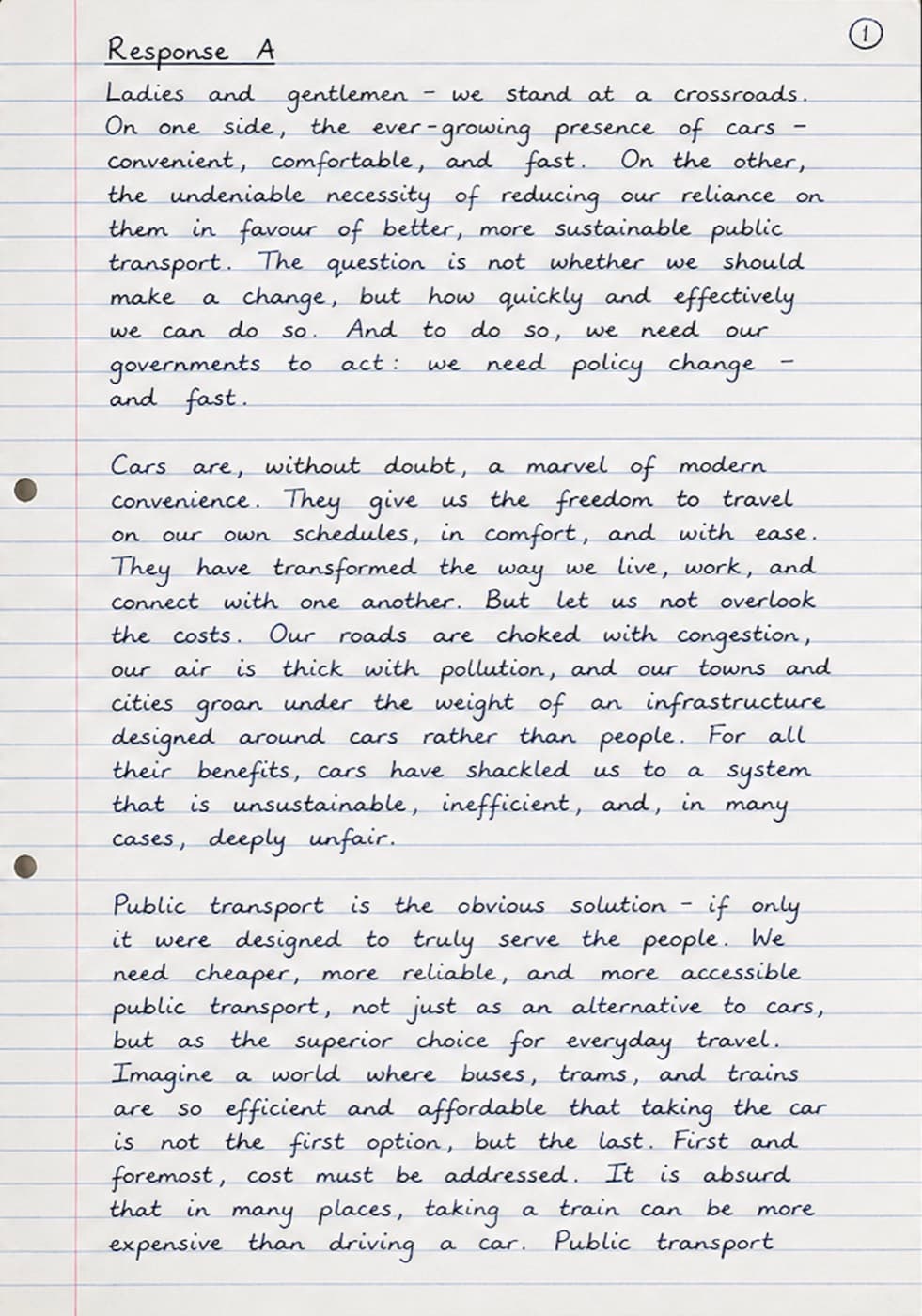
Effective rhetorical opening with 'Ladies and gentlemen - we stand at a crossroads.'

Clear paragraphing and logical progression through three convincing arguments.

Develop a more memorable closing so the argument ends with a sharper final impact.

5. Teach the remaining gap

Spend the time you save on the next draft

On this Question 5 speech the remaining gap was a sharper closing. On Question 4 it was linking the two writers inside each paragraph. The time you save on marking goes into teaching that next step — across a class, not one book at a time.

The same loop, on writing you already know

These three responses appear in AQA’s published answers and commentaries. We uploaded the handwriting to the live product — Q4 awarded 15/16 — so you can see upload, report and comparison without putting a pupil’s work on a public page.

Q2 · Summary comparison · AQA Level 3

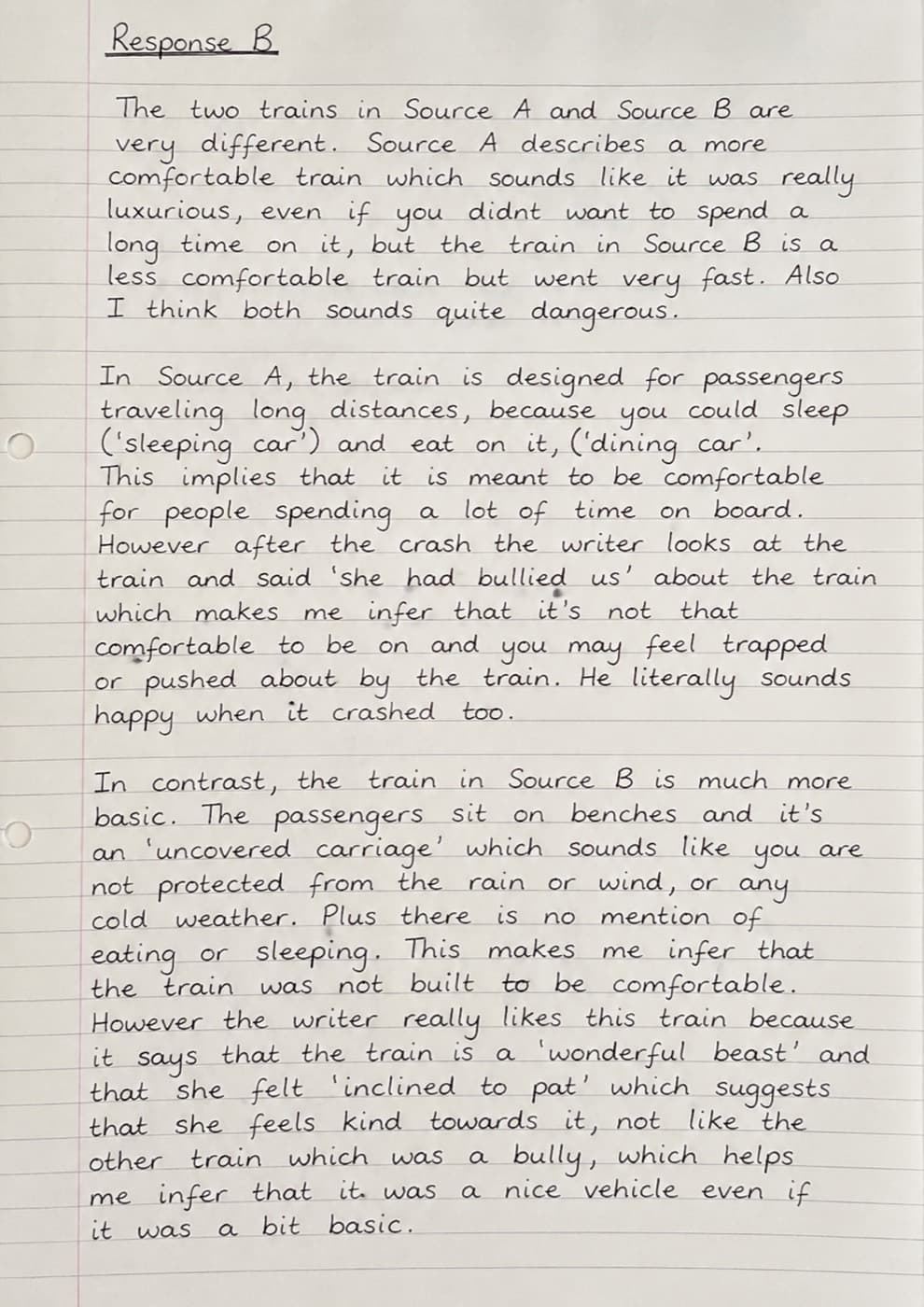
Handwritten AQA Paper 2 Question 2 Response B, published as a Level 3 summary comparison
AQA 8700 Paper 2 · Question 2
6/8marks

GCSE English Language · Q2

Indicative grade 7

Summary comparison · 75%

AO1 6/8

You compare the sources directly rather than writing about them separately.

You make clear inferences from detail such as ‘sleeping car’ and ‘uncovered carriage’.

Keep each inference tightly linked to the evidence; avoid speculative comment.

Q4 · Compare perspectives · AQA Level 4

Handwritten AQA Paper 2 Question 4 Response A, published as a Level 4 comparison of perspectives
AQA 8700 Paper 2 · Question 4
15/16marks

GCSE English Language · Q4

Indicative grade 9

Compare perspectives · 94%

AO3 15/16

You compare both sources directly and repeatedly, rather than writing about them separately.

You analyse methods with relevant terminology, such as 'semantic field', 'personifies', and 'direct address'.

Link the two writers more explicitly within each paragraph — whereas, similarly, in contrast.

Q5 · Transactional writing · AQA Level 4

Handwritten AQA Paper 2 Question 5 Response A, published as a Level 4 speech on cars and public transport
AQA 8700 Paper 2 · Question 5
37/40marks

GCSE English Language · Q5

Indicative grade 9

Transactional writing · 93%

AO5 22/24AO6 15/16

Effective rhetorical opening with 'Ladies and gentlemen - we stand at a crossroads.'

Clear paragraphing and logical progression through three convincing arguments.

Develop a more memorable closing so the argument ends with a sharper final impact.

Handwritten responses and published levels are from AQA GCSE English Language (8700) Paper 2 Answers and commentaries (from 2026, v1.1 June 2025). ReMarkAble AI is not affiliated with or endorsed by AQA. Shown so departments can compare live marks with published exemplification, not a pupil’s book. See a live marked example.

Handwriting-heavy subjects supported at A-Level

Subjects where students must explain, analyse, or evaluate in writing. Coverage varies by exam board.

English Language and English Literature
History
Geography
Politics
Sociology
Psychology
Philosophy
Religious Studies
Law
Business
Economics
Media Studies
Drama and Theatre
Classical Civilisation
Health and Social Care (CCEA)

The system adapts feedback focus to subject type rather than applying generic comments.

Built around A-Level expectations

Feedback focuses on

Quality and coherence of argument
Use and evaluation of evidence
Depth of explanation and analysis
Structure and clarity of response
Accuracy and academic control

ReMarkAble AI does not write essays. It proposes marks and a predicted grade against the mark scheme; in class marking, a teacher confirms or overrides them before a pupil sees anything.

Supporting Teachers with A Level Marking

Teachers use ReMarkAble AI to:

  • Draft high-quality feedback efficiently
  • Reduce repetitive commentary
  • Support consistency across teaching groups
  • Free time for targeted intervention

In class marking, a teacher reviews and approves every result before it is released.

Supporting Students as a Revision Aid

Students use ReMarkAble AI to:

  • Upload practice essays and timed responses
  • Receive structured feedback across subjects
  • Identify weaknesses in reasoning or explanation
  • Revise with clarity and purpose

This enables independent revision without shortcuts.

Academic Integrity

Designed for responsible use at A-Level

No essays written for students
No model answers
No replacement of independent thinking
Clear separation between feedback and authorship

Academic integrity is preserved.

Institutional Support

Suitable for Sixth Forms and Colleges

Sixth form departments
Colleges
Independent revision programmes
School-led AI adoption policies

Usage can be governed at institutional level.

Who This Is For

A Level teachers across multiple subjects
Sixth form leaders
Students preparing for final exams
Schools adopting AI responsibly
Institutions focused on academic standards

A Level FAQs

Smarter feedback for advanced subjects

Support deeper understanding, clearer reasoning, and more effective revision — without compromising standards.